Article Overview
Flooring: The First Decision, Not the Last
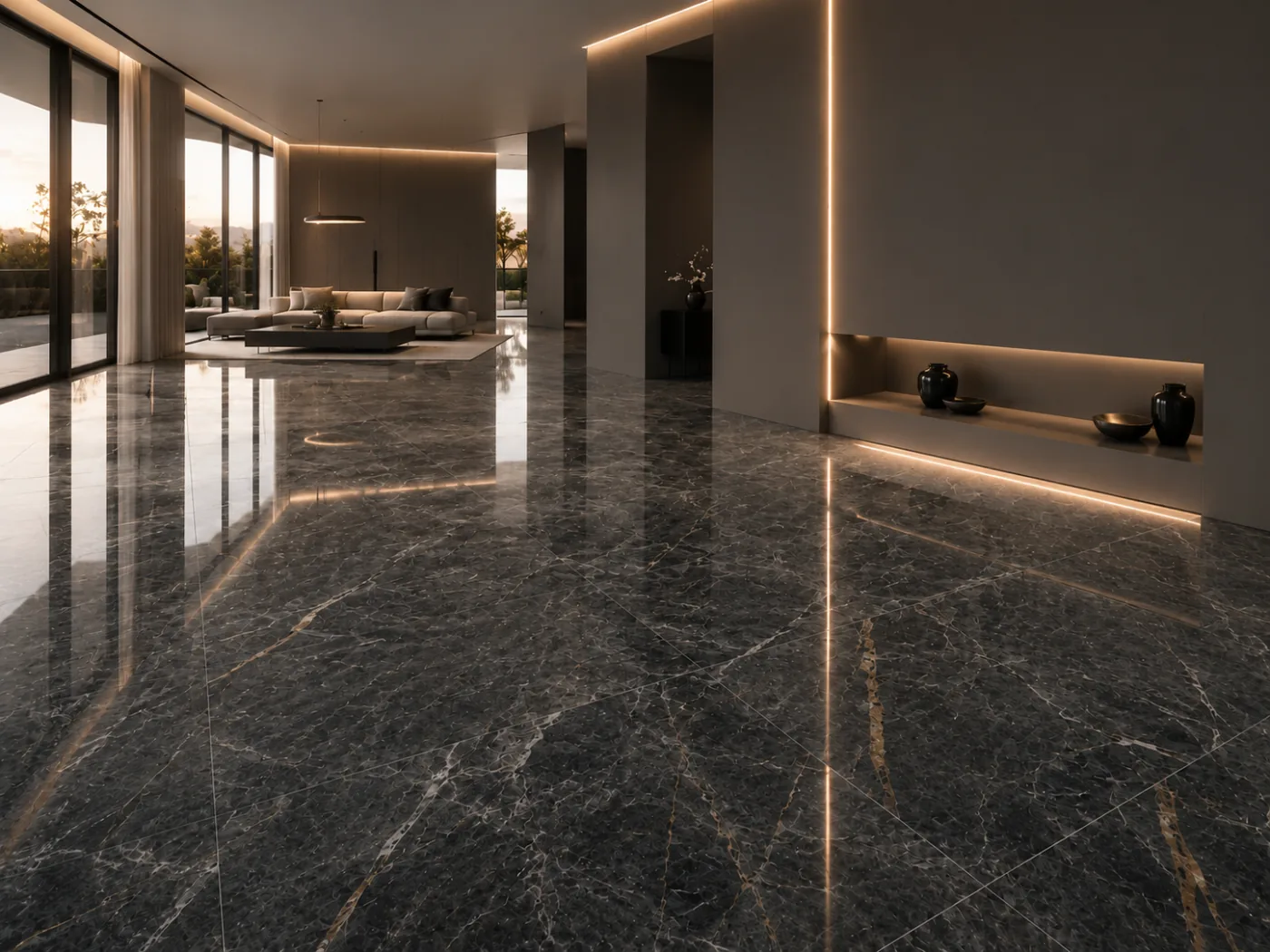
The floor is the largest surface in any room and the hardest to change. It should be chosen before the pieces that sit on it.

Explore the Journal
Discover more design ideas, product guidance and inspiration for refined interiors in every space.
View allWhat You Will Learn
- Why the floor sets the palette for everything else in the room.
- How format and joint width change the perceived size of a space.
- What to ask about a surface before it is specified.
- Valenzá Editorial Team
- 6 min read
- August 2026
In most projects the floor is decided late, after the furniture and the fixtures. That order is backwards. The floor is the largest continuous surface in the house and the one that cannot be swapped without dismantling the room.
 Everything else in the room is chosen against the floor
A floor sets the palette. Its undertone decides whether the woods in the room read warm or muddy, whether a white wall looks clean or grey, and whether a brass fixture glows or disappears. Choosing it last means every earlier decision has to be corrected.
It is also the surface with the longest life. Cabinets are replaced, sofas are reupholstered, walls are repainted; the floor stays. That permanence deserves the first and most careful decision, not the leftover budget.
This is why the most coherent interiors are usually built from the ground up: the floor is selected, and everything else is chosen against it.
Format and joints change the room
Large formats read as calm because they show fewer lines. In a small room, a large tile with a tight joint can make the space feel wider than a small tile that draws a grid across the floor. The opposite is also true: in a very large room, an oversized format with no visible rhythm can feel anonymous.
Joint width and colour are part of the design, not a detail left to the installer. A joint that contrasts with the tile turns the floor into a pattern; a joint that matches it lets the surface read as a single plane.
Direction matters as much as format. Laying the long dimension along the main axis of a room stretches it; laying it across shortens it.
- 1. Match the joint colour to the tile when you want a continuous surface.
- 2. Run the long dimension along the direction you want to lengthen.
- 3. Check the finish underfoot in wet areas before specifying.
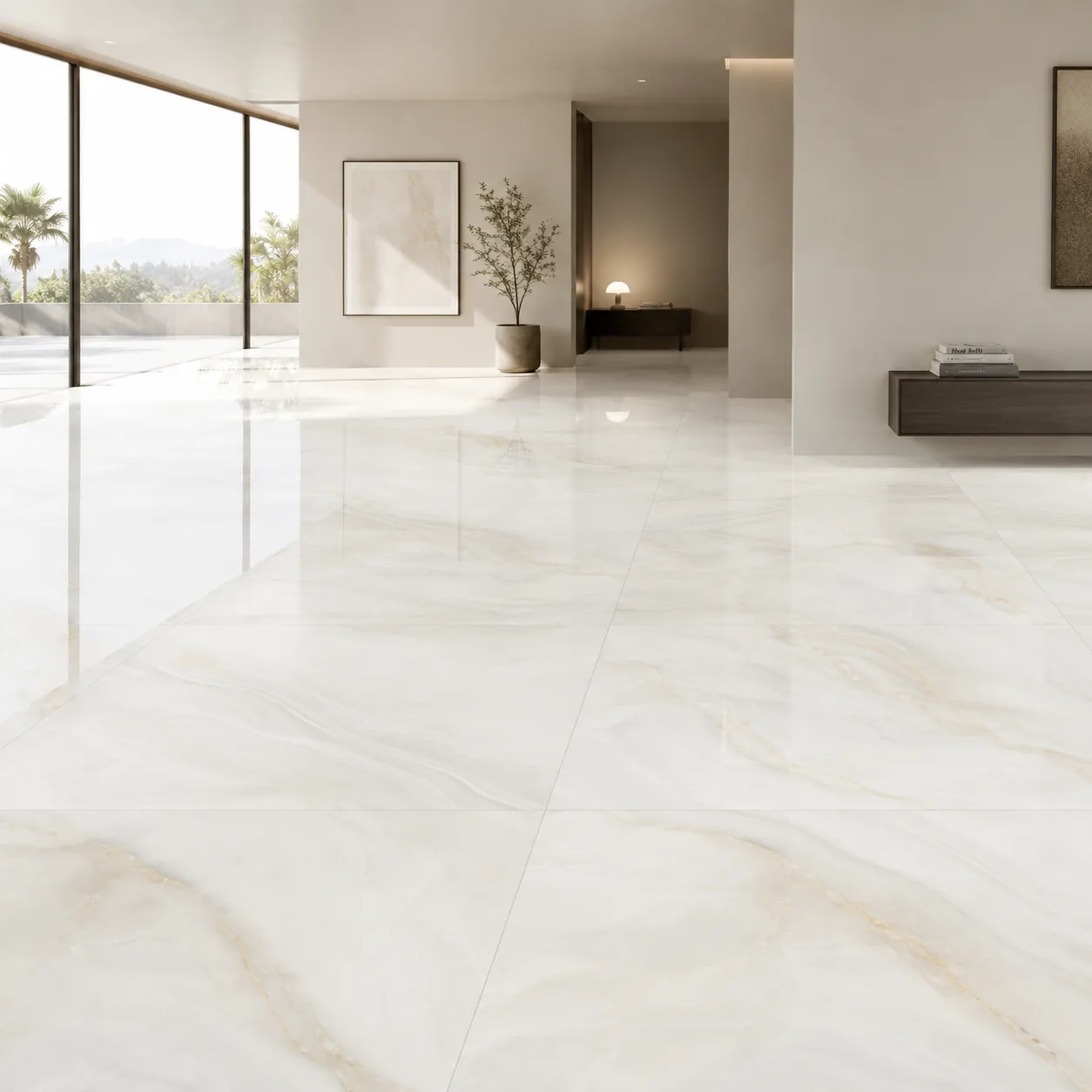
Questions to ask before specifying
Beyond appearance, a surface has to answer for how it behaves. Slip resistance in bathrooms and outdoor areas, resistance to staining in kitchens, and thermal behaviour where there is underfloor heating are all decided by the specification, not by the look.
It is also worth confirming batch availability. Ceramic and porcelain are produced in batches with slight tonal variation, and ordering the full quantity at once avoids a visible line where the second delivery begins.
The floor is the one surface a room cannot hide, and the one it is built upon.
Choosing the floor first is not a matter of taste but of sequence. It is the decision that makes every later decision easier.
Get it right and the room has a foundation. Get it wrong and everything placed on it will be working to compensate.
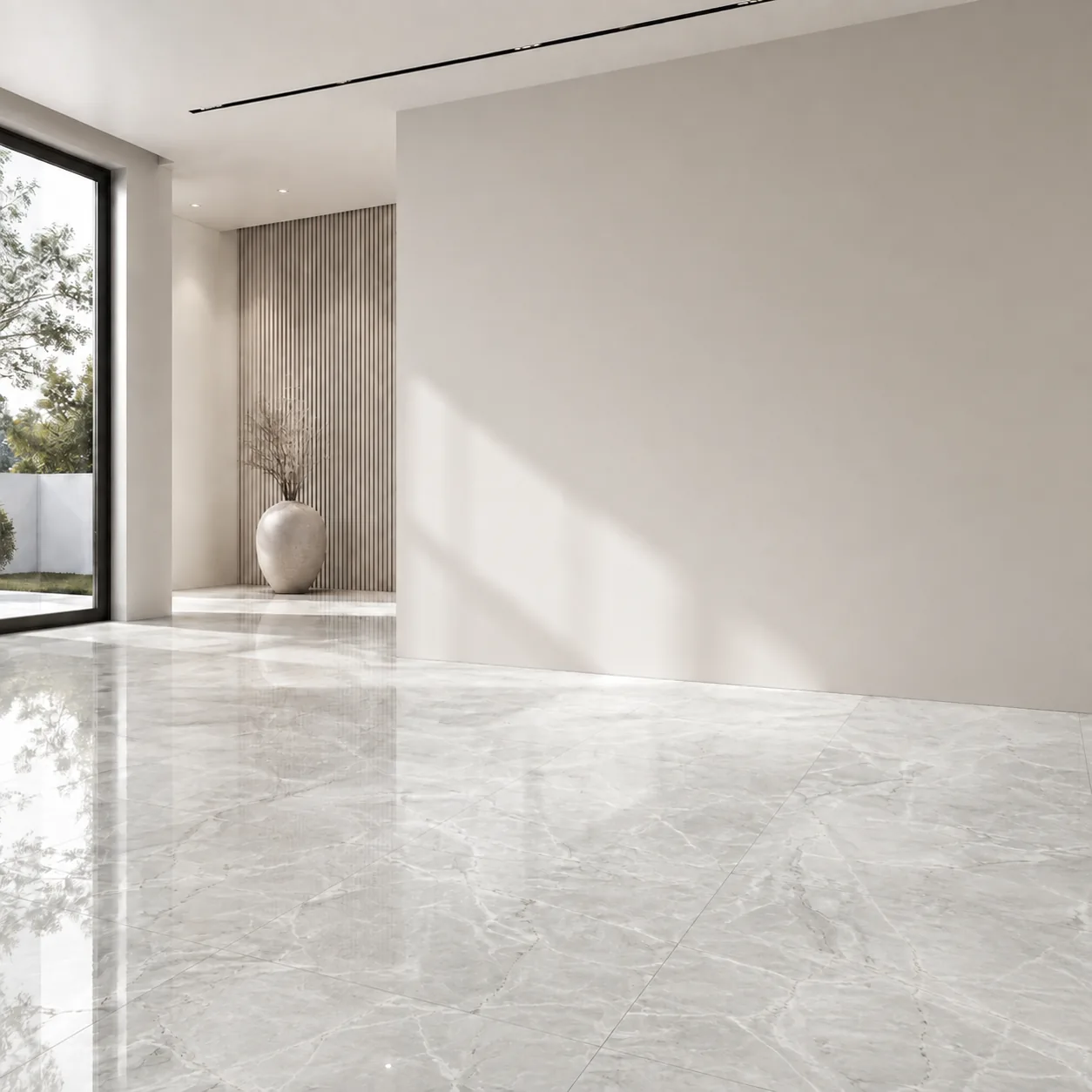
Italian design for every space.
Discover pieces designed to bring elegance, performance and architectural harmony into every room.