Article Overview
Lighting as a Building Material
Light does more than make a room visible. It decides its scale, its temperature and the hour it seems to be.

Explore the Journal
Discover more design ideas, product guidance and inspiration for refined interiors in every space.
View allWhat You Will Learn
- Why a room needs several layers of light rather than one bright source.
- How colour temperature changes the way stone and wood are read.
- Where a decorative fixture earns its place, and where it does not.
- Valenzá Editorial Team
- 5 min read
- August 2026
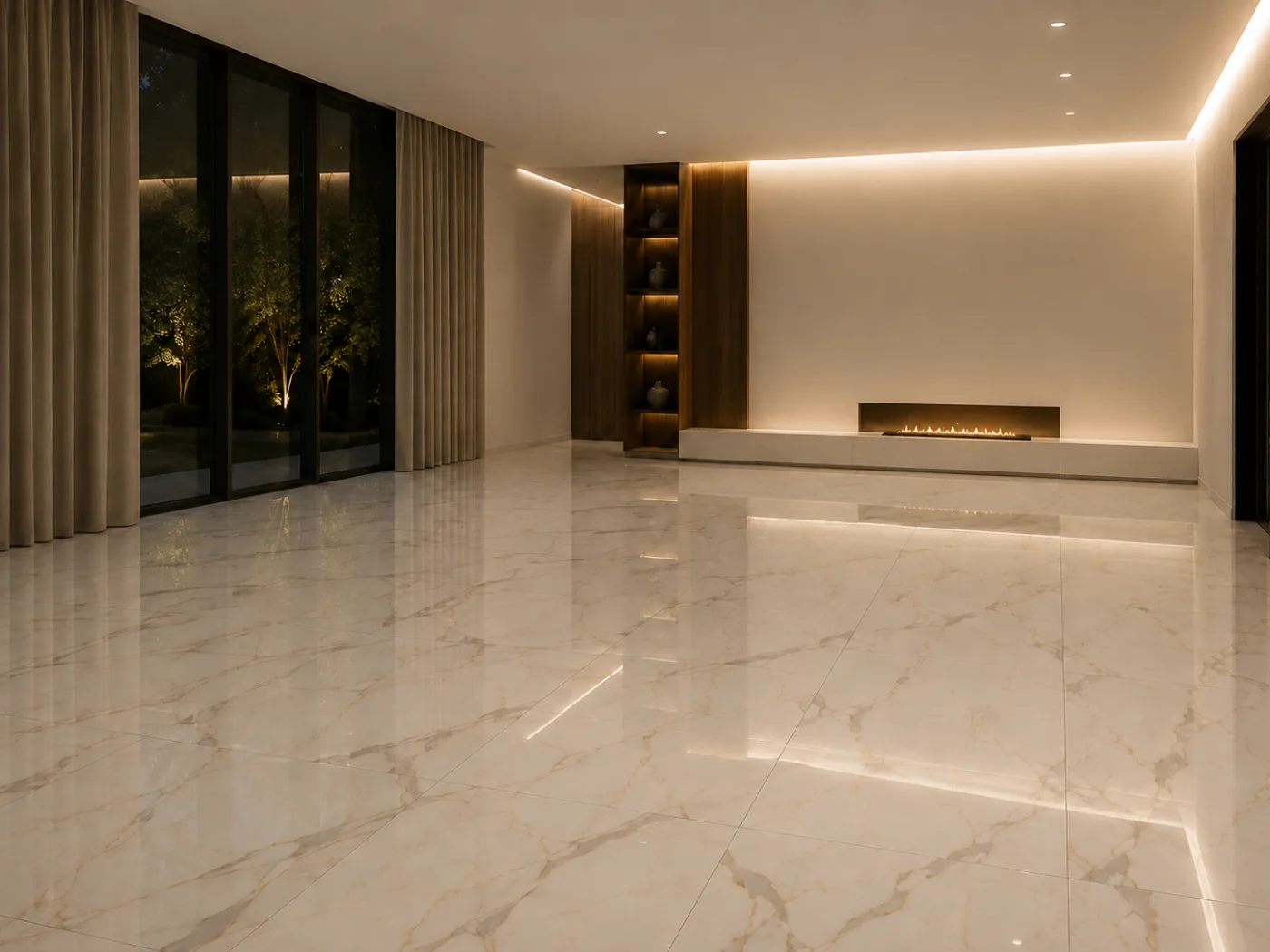
Architects treat light as a material, not as an accessory added at the end. It has weight, direction and temperature, and it can make the same stone look warm and generous or flat and clinical.
 The same room, lit two ways, is two different rooms
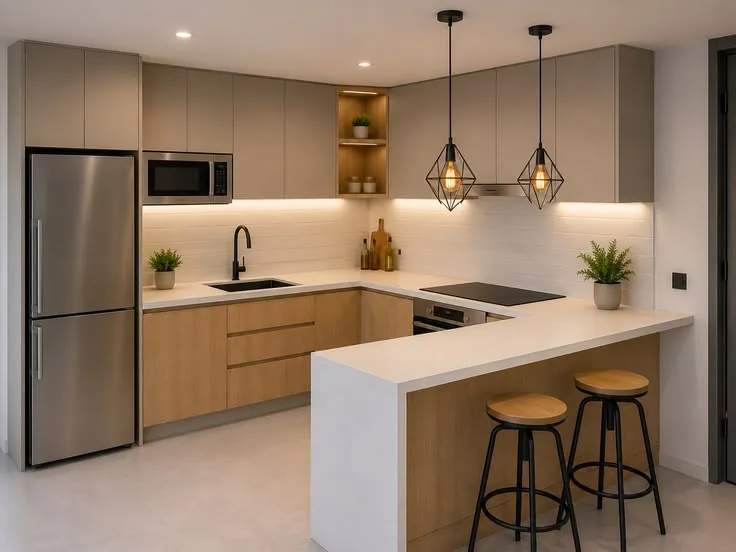
A single ceiling fixture flattens a space. It casts one direction of light, erases shadow and makes every surface read at the same value. Rooms lit this way feel smaller and busier than they are, because nothing recedes.
Layering solves it. A general layer sets the base level, a task layer serves the work that happens in the room, and an accent layer gives depth by leaving some areas darker on purpose. The contrast between them is what makes a space feel considered.
This is why lighting should be planned with the architecture and not chosen at the end from a catalogue. Where the light comes from matters more than what the fitting looks like when it is off.
Temperature is a design decision
Warm light flatters skin, wood and brass; cooler light sharpens white surfaces and reads as clinical. Neither is correct on its own, but mixing them carelessly within one room is what makes an interior feel unresolved.
In living areas and bedrooms, a warm and consistent temperature holds the atmosphere together. In kitchens and workspaces, a slightly cooler task layer helps precision, as long as the general layer stays warm enough for the room to relax at night.
Dimming is the other half of the decision. A fixture that cannot be lowered forces the room into one mood, regardless of the hour.
- 1. Set one warm temperature as the base for living areas.
- 2. Reserve cooler light for task zones only.
- 3. Specify dimming wherever the room is used both day and night.
When a fixture should be seen
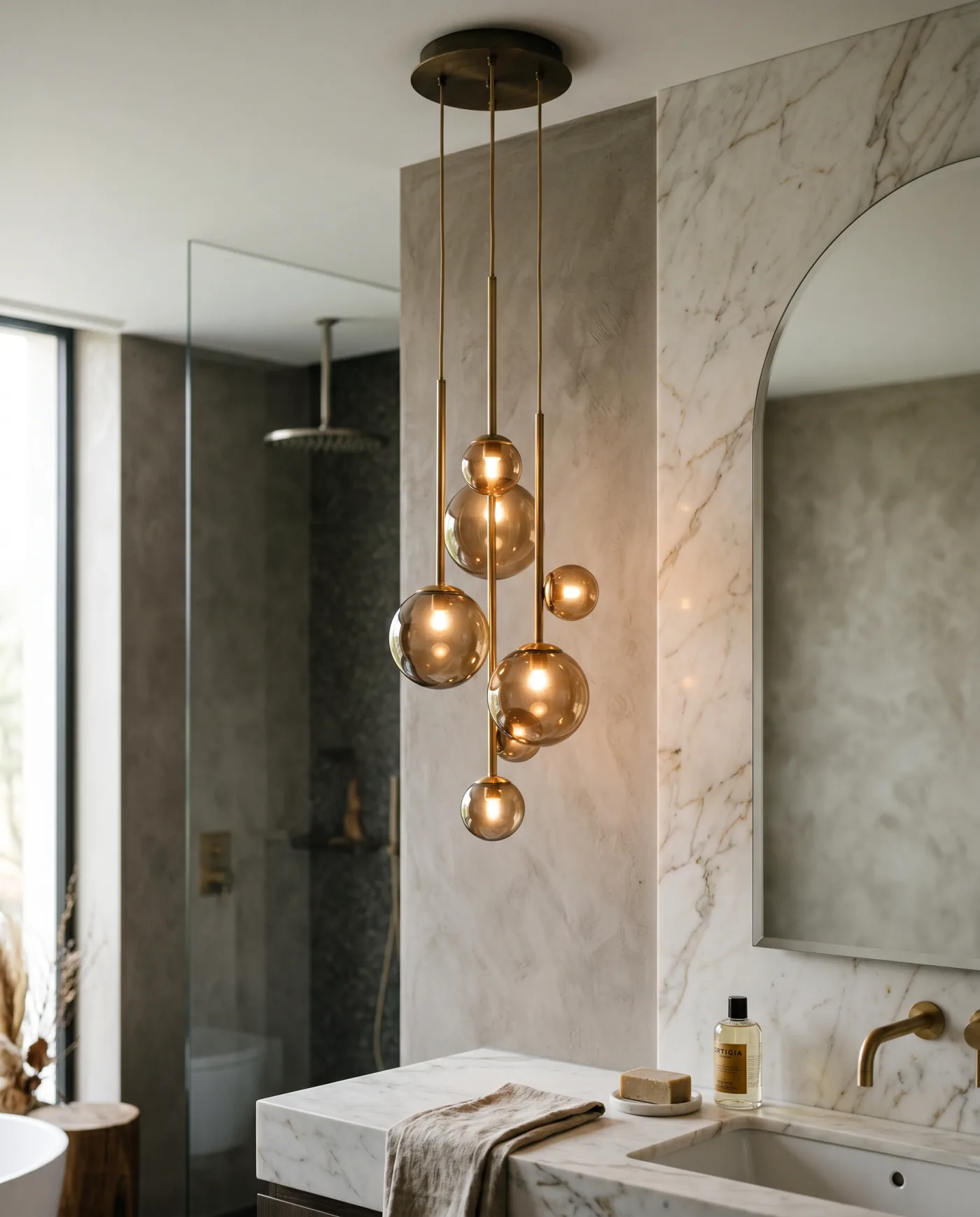
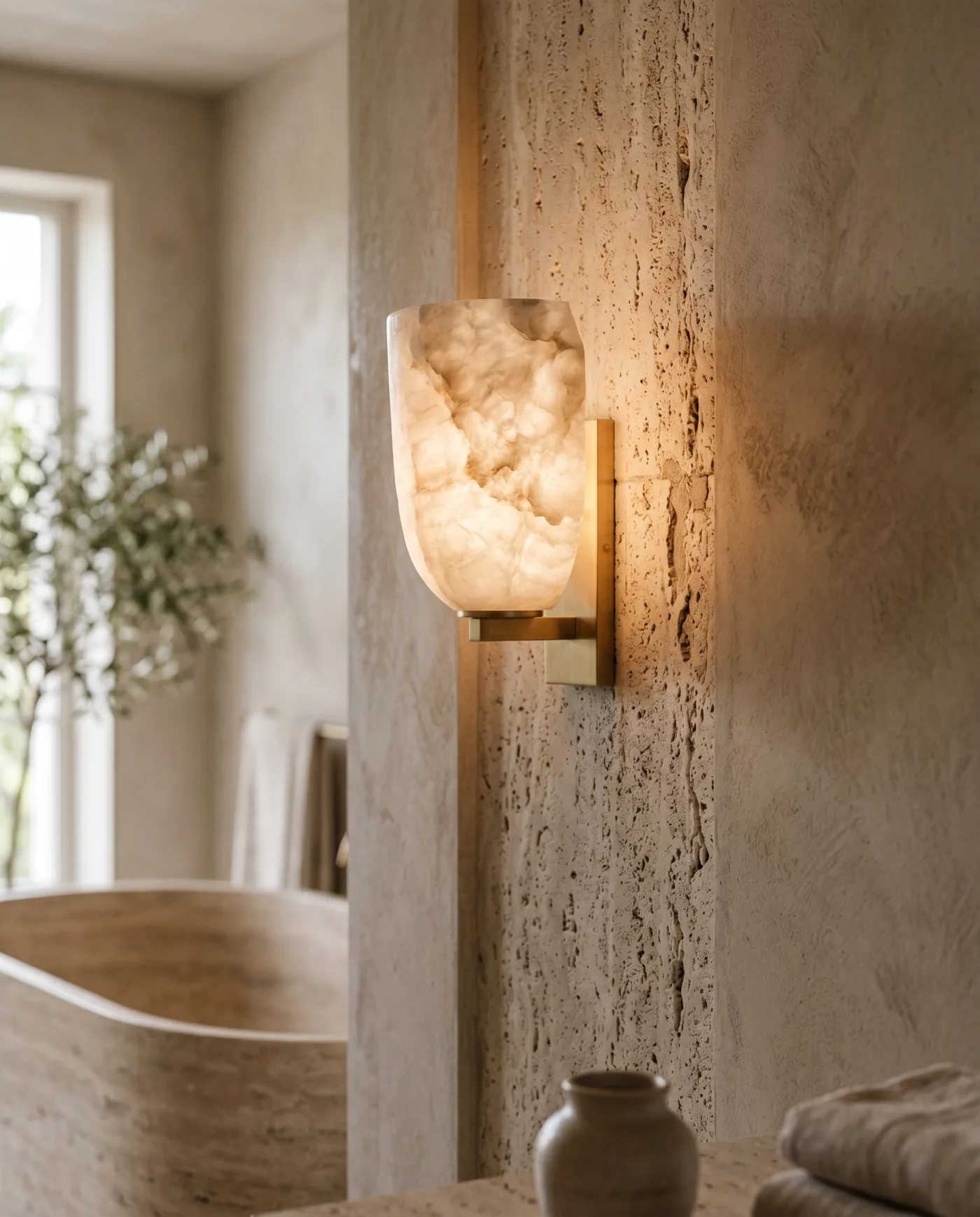
Not every light needs to be invisible. A decorative piece earns its place when it does something architecture cannot: marking the centre of a table, giving a stairwell vertical rhythm, or holding a double height wall that would otherwise feel empty.
The rule is that a visible fixture should be doing a job. When it is there only to fill a ceiling, it competes with the room instead of completing it.
Light is the only material in a room that can be changed at any hour of the day.
Treating light as a building material changes the order of decisions. It stops being the last item on a list and becomes part of how the room is shaped.
Planned that way, lighting does not decorate the architecture. It reveals it.
Italian design for every space.
Discover pieces designed to bring elegance, performance and architectural harmony into every room.